| |
|

Home |
Contact Us |
Design |
Leaded Glass |
Crests |
Hardware |
Doors |
Architectural Stone |
Paneling |
Examples |
Gallery |
Clearance |
About Our Company |
Catalog
Tudor Doors

Tudor Panel Half-Light Oak Door |
We make classic Tudor doors
from high quality woods (oak, mahogany) that were
inspired by English Manor and Castle works. Our doors can be made to almost size and thickness. Our most
classic door item is a plank door that looks ideal on
Tudor architecture. We can also add window(s) to most any
Manor door to provide wonderful light and beautiful
leaded glass into your home.
See Example Doors
|
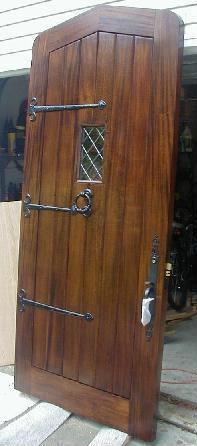
Stuart Plank Mahogany Door |
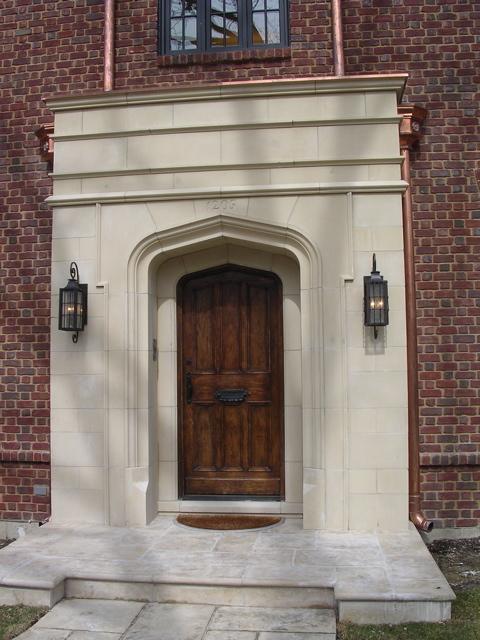
Tudor Panel Door with Doorway E |

Classic Plank Oak Door with Doorway C |

Stuart Plank Double with Sidelight |
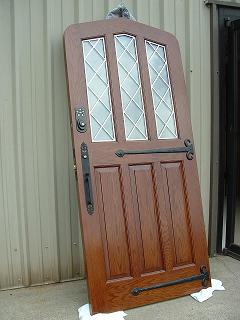
Tudor Panel Half Light |
Be sure to check our line of strap hinges that look best on the English Manor doors.
Also check our Gothic door surrounds that were designed to work with our
doors.
Note: The doors shown below can
also be built rectangular - without the gothic arch.
These doors are heavy and will
last a lifetime!
English Manor Doors
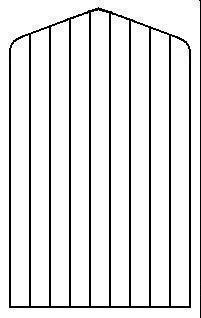
Classic Plank Door
Specify height, thickness, width, jamb depth and wood type.
Options: windows, finish, strap hinges and door studs. |

Jacobean Panel Door
Specify height, thickness, width, jamb depth and wood type.
Options: windows, finish, strap hinges and door studs. |

Tudor Panel Door
Specify height, thickness, width, jamb depth and wood type.
Options: windows, finish, strap hinges and door studs. |
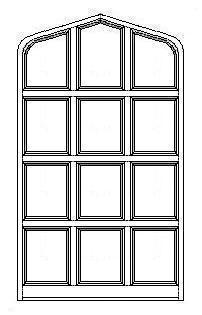
Charles Panel Door
Specify height, thickness,width, jamb depth and wood type.
Options: windows, finish,strap hinges and door studs. |

Henry VIII Panel Door
Specify height, thickness,width, jamb depth and wood type.
Options: windows, finish,strap hinges and door studs. |
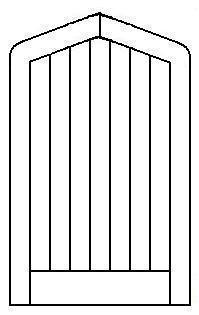
Stuart Plank Door
Specify height, thickness,width, jamb depth and wood type.
Options: windows, finish,strap hinges and door studs. |
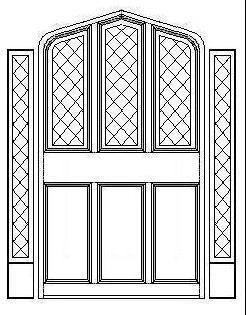
Tudor Panel Door Half-Light with Sidelights
Specify height, thickness,width, jamb depth and wood type.
Options: windows, finish,strap hinges and door studs. |
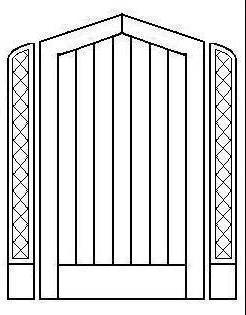
Stuart Plank with Sidelights
Specify height, thickness,width, jamb depth and wood type.
Options: windows, finish,strap hinges and door studs. |
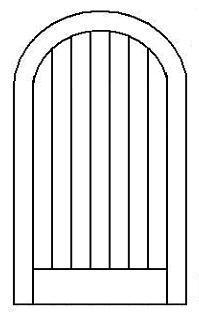
Stuart Radius Panel Door
Specify height, thickness,width, jamb depth and wood type.
Options: windows, finish,strap hinges and door studs. |
About Tudor Doors :
One of the most recognizable
elements of Tudor architecture is the manor or castle door.
These doors tended to be more massive than typical front
entrance wood-works. These doors were mostly made of hardwoods
- where oak was the primary wood used in medieval times. Oak
was chosen for its strength, durability, and availability in
England and other parts of northern Europe. Tudor door
reproductions are normally also made of oak. These doors tend
to look heavy and strong - typically embellished with
hand-forged iron hardware. With Tudor architecture, the door
should not only appear heavy and strong, but actually be heavy
to swing. These doors are typically surrounded by stone which
only magnifies the castle effect. The stone surround in very
high-end residential structures was typically limestone in the American Tudor revival (1920's), but the expense of this stone
and the lack of skilled artisans to work it has thwarted its use. These days it is much more common to use
cast stone products which can look equally authentic and
strong. Gothic arched door stone surrounds also normally have a
"spandrel" which decorates perpedicular arches with carved motifs -
sometimes with leaves or flowers while other times with
coat-of-arm blanks or gothic motif like quatrefoils and
trefoils. These doors always have a deceptively simple exterior
- where the internal construction can be quite complex with
multiple mortise and tenons required to support the large
weight. Many times iron nails or bolts were use to bind the layers or tenon to the
enclosing planks. If nails were used, they were cinched or bent at the tip
to disallow movement. The doors of many English manors and
castles are the original woodwork which is amazing considering
the age of these structures. As all of Tudor architectural
elements, these wood-works were natural products, made with
extraordinary craftsmanship, and have lasted for centuries. The
door is the primary focus of any front elevation of a house and
should be given special consideration and priority.
Date of last Modification: August
20, 2012
Contact: info@tudorartisans.com
 Copyright: Tudor Artisans Inc.
1999-2012 Copyright: Tudor Artisans Inc.
1999-2012
|
|
|
